While in New York couple of weeks ago (This sounds like I am a frequent visitor, but it was my first visit), I watched The Phantom of the Opera. Though I missed few words in couple of songs from this musical, I liked the whole experience. This Sunday, I went to see another Broadway play The King and I at San Diego civic theatre.
What impressed me most in both these plays was the excellent use of technology and the vocal range of the actors. I was vaguely aware of terms like Bass, Baritone and Soprano; but not exactly sure about them. Found this article on Wikipedia which explains them in detail.
Marathi theatre started with musical plays sometimes around 1800. These plays and the songs in them were hugely popular. Apart from the entertainment, many plays like 'ekach pyala' and 'keechak-wadh' successfully sent out strong messages of social reforms to the masses and helped the independence movement. But I think, circa 1940 modern techniques like Brechtian plays and na-natya (could not find the English equivalent for this - when translated it literally means no play) became first more accepted in the intellectual circles and then more popular. I have read many articles by authors who in their childhood and youth, experienced the golden age of Bal-gandharva repenting the fact that not enough was done to strengthen Sangeet Nataks (musicals) while embracing new things. Broadway musicals and Kabuki survived and prospered, but not many local theatres (Yakshagan being an exception, thanks largely to Dr. Shivaram Karanth and to some extent Tiatr in Goa).
While watching these plays and listening to the songs, I dearly missed the good old Natya-sangeet. Though one could still listen to the old songs, it is almost impossible to regain the lost glory and experience.
Thankfully Broadway, San Diego has a number of good plays coming up within next few months like Wicked, Mamma mia and The Lion King. I was in two minds whether to purchase a season ticket which would be good for five upcoming plays except The Lion King having already spent a fortune on these two plays, but then decided to go for it after hesitating for half a minute.
While writing about the theatre and plays, I must tell about the Blue Man group. (I wonder, why it is blue man in stead of blue men). Again, I watched it sitting in the very first row in New York. Initially, I found it little bit weird but then liked it later on. These guys are absolutely terrific. The show itself is a combination of music (from rock to PVC pipes), some animated tricks and involving audience. First few rows are equipped with plastic hoods. At the end of the show, my hood was covered with blue paint and pulped bananas. Here is a link if you wish to watch some of their videos.
Wednesday, September 21, 2005


Tuesday, September 13, 2005
'Darkness at Noon' and 'For whom the bell tolls'
'I don't approve of mixing ideologies,' Ivanov continued. 'There are two conceptions of human ethics, and they are at opposite poles. One of them is Christian and humane, declares the individual to be sacrosanct, and asserts that the rules of arithmetic are not to be applied to human units. The other starts from the basic principle that a collective aim justifies all means, and not only allows, but demands, that the individual should in every way be subordinated and sacrificed to the community - which may dispose of it as an experimentation rabbit or a sacrificial lamb. The first conception could be called anti-vivisection morality, the second, vivisection morality. Humbugs and dilettantes have always tried to mix the two conceptions; in practice, it is impossible. Whoever is burdened with power and responsibility finds out on the first occasion that he has to choose; and he is fatally driven to the second alternative. Do you know, since the establishment of Christianity as a state religion, a single example of state which really followed a Christian policy? You can't point out one. In times of need- and politics are chronically in a time of need - the rulers were always able to evoke "exceptional circumstances", which demanded exceptional measures of defence. Since the existence of nations and classes, they live in a permanent state of mutual self-defence, which forces them to defer to another time the putting into practice of humanism....'
-- Taken from the chapter 'The Second Hearing' of 'Darkness at Noon' by Arthur Koestler.
I took two books with me to read while travelling to East Coast. (which proved to be a wise decision, as I missed my first flight and had to wait for 5 hours to catch the next.) The first one was 'For whom the bell tolls' by Hemingway and the other 'Darkness at noon.' I did not have any idea about the subjects of these books and did not imagine that they could be related to each other in a strange way.
Both the books were published in 1940. In 'For whom the bell tolls', Hemingway portrays the struggle of left-wing group against the fascist forces during the Spanish Civil war. The protagonist is an American fighting for the Republican army.
'Darkness at Noon' on the other hand is based on infamous Moscow trials in which Stalin 'purged' the party and the armed forces. This book has many paragraphs, like one given above, which could very well apply to what is happening now.
Rise and fall of Communism could be considered as the most important event of 20th century, barring perhaps the two World wars. I was thrilled to read two great books which revolved around its two opposite facets.
-- Taken from the chapter 'The Second Hearing' of 'Darkness at Noon' by Arthur Koestler.
I took two books with me to read while travelling to East Coast. (which proved to be a wise decision, as I missed my first flight and had to wait for 5 hours to catch the next.) The first one was 'For whom the bell tolls' by Hemingway and the other 'Darkness at noon.' I did not have any idea about the subjects of these books and did not imagine that they could be related to each other in a strange way.
Both the books were published in 1940. In 'For whom the bell tolls', Hemingway portrays the struggle of left-wing group against the fascist forces during the Spanish Civil war. The protagonist is an American fighting for the Republican army.
'Darkness at Noon' on the other hand is based on infamous Moscow trials in which Stalin 'purged' the party and the armed forces. This book has many paragraphs, like one given above, which could very well apply to what is happening now.
Rise and fall of Communism could be considered as the most important event of 20th century, barring perhaps the two World wars. I was thrilled to read two great books which revolved around its two opposite facets.
Wednesday, August 17, 2005
Independence day function, Mangal Pande and some snaps
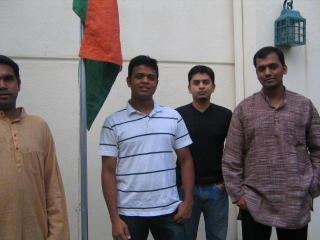
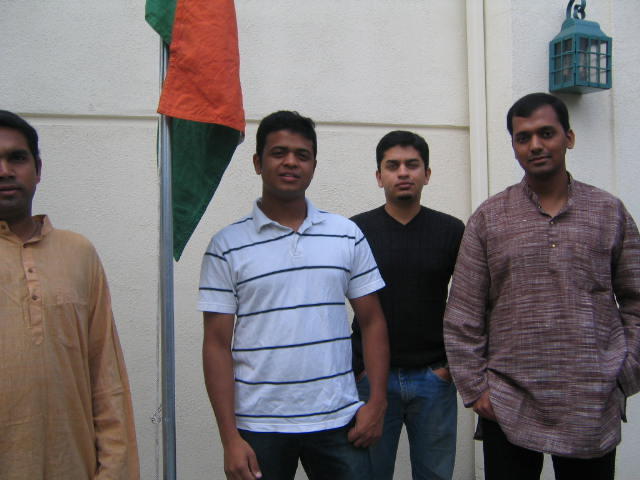
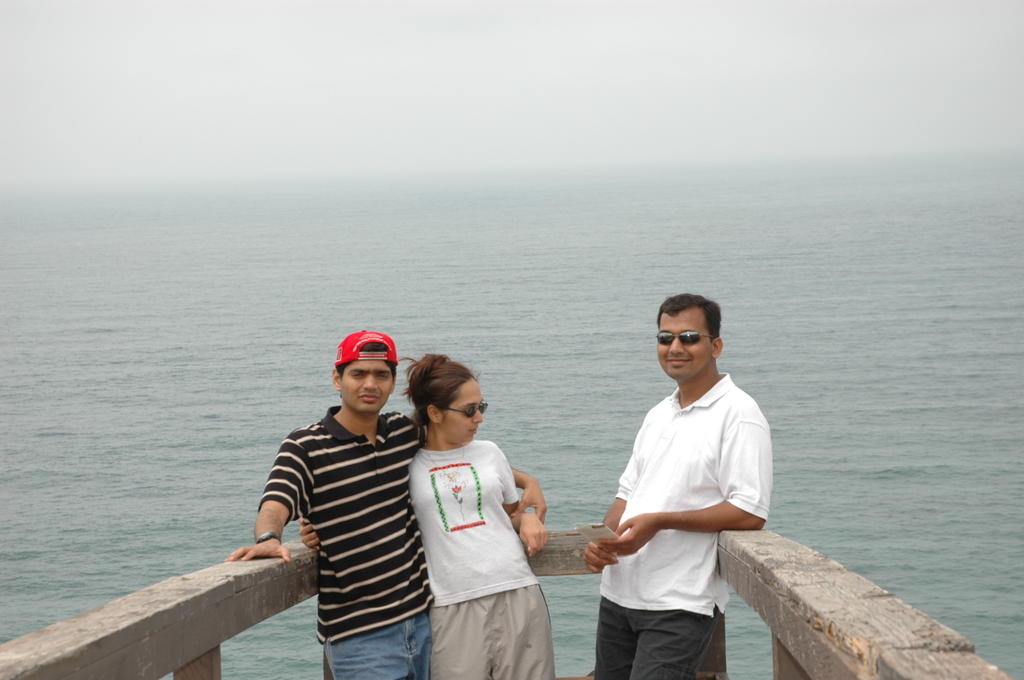
1. We celebrated Independence day at SDSU. As usual, there was a Power Point presentation about India, folk dances from each state, patriotic songs and few short speeches by Indian Professors on campus. All in all, a good event. Here is a photo taken with my room-mates, Ameya (in black) and Aditya (in white) standing next to me at the function.
2. Also watched the Mangal Pande movie in the evening. Okish, not as good as Lagaan. A funny thought crossed my mind - It would be so ironic, if after watching a movie in which the protagonist revolts once he finds out that the cartridges use cow and pig fat, few members of same nationality in the audience have had beef/pork dinner in the Steakhouse across the street. So much has changed in 150 years.
3. Returned the book Zen and art of motorcycle maintenance to library without completing it. I usually do not like to leave any book mid-way, but this time I had to return this book within a short time and for some reason could not concentrate while reading it. Found it interesting initially for a brief time, but then later on found out that same thought is stretched across numerous pages. May be, will complete it at a later date. Also got few of the classics now that I have loads of time and started with For whom the bell tolls by Hemingway. Went to a quiet beach with my favorite Frappuccino and read it for few hours. I am supposed to work on my thesis, but these are last days of California summer :)
4. August 16, 2002 : I reached US for the first time on this date. So over 3 years now. I had a habit of kind of pseudo-retrospecting on such occasions and then kicking myself for not achieving anything worthwhile. I recollect that feeling when I turned 14. I was bit sad that 20% of my life is over and I have not done anything worthy. When I turn 25, may be I will think that best part of my youth is over and now my middle-age has started. But, now I feel I am not so significant to think along these lines. While thinking in this way might inspire someone into action, I know I won't change a bit. So why worry?
5. Got some further supporting data regarding my post Outsider and Insider on this blog (http://viprashna.blogspot.com/2005/04/outsider-and-insider.html). San Diego Union Tribune published results of survey conducted about Immigration from Mexico. While the first generation immigrants oppose stricter measures, considerable majority of second generation immigrants feel that there should be more stringent conditions placed.
6. Some photos from trek :
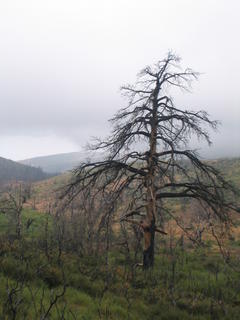
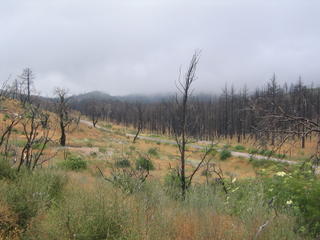
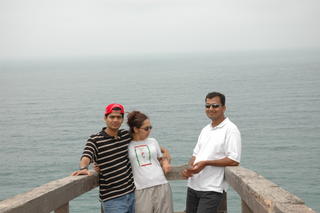
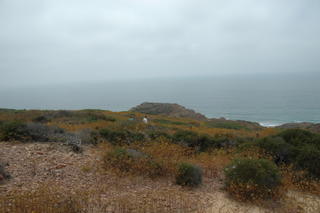
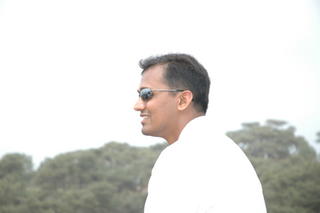
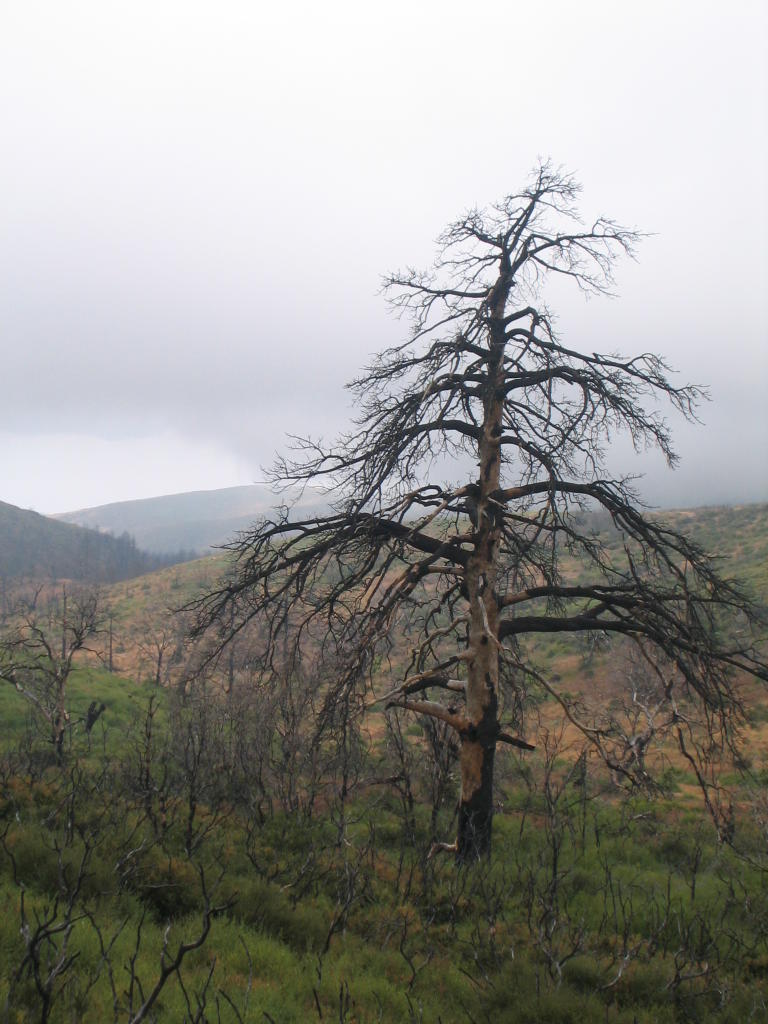
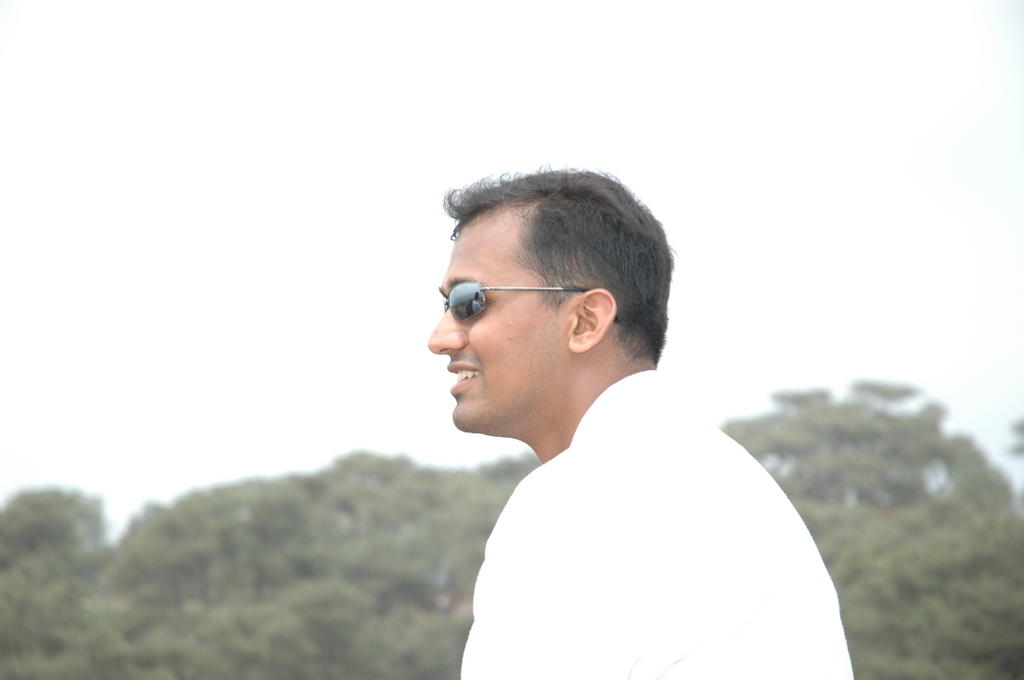
First two snaps are from 10-mile trek at Mount Laguna, with what Thomas Hardy might put as 'Gray of the purest melancholy' all around us. The next three were taken at Torre Pines State reserve with my friends Aditi and Anuj. The last one shows the toll taken by time on my hairline :)
2. Also watched the Mangal Pande movie in the evening. Okish, not as good as Lagaan. A funny thought crossed my mind - It would be so ironic, if after watching a movie in which the protagonist revolts once he finds out that the cartridges use cow and pig fat, few members of same nationality in the audience have had beef/pork dinner in the Steakhouse across the street. So much has changed in 150 years.
3. Returned the book Zen and art of motorcycle maintenance to library without completing it. I usually do not like to leave any book mid-way, but this time I had to return this book within a short time and for some reason could not concentrate while reading it. Found it interesting initially for a brief time, but then later on found out that same thought is stretched across numerous pages. May be, will complete it at a later date. Also got few of the classics now that I have loads of time and started with For whom the bell tolls by Hemingway. Went to a quiet beach with my favorite Frappuccino and read it for few hours. I am supposed to work on my thesis, but these are last days of California summer :)
4. August 16, 2002 : I reached US for the first time on this date. So over 3 years now. I had a habit of kind of pseudo-retrospecting on such occasions and then kicking myself for not achieving anything worthwhile. I recollect that feeling when I turned 14. I was bit sad that 20% of my life is over and I have not done anything worthy. When I turn 25, may be I will think that best part of my youth is over and now my middle-age has started. But, now I feel I am not so significant to think along these lines. While thinking in this way might inspire someone into action, I know I won't change a bit. So why worry?
5. Got some further supporting data regarding my post Outsider and Insider on this blog (http://viprashna.blogspot.com/2005/04/outsider-and-insider.html). San Diego Union Tribune published results of survey conducted about Immigration from Mexico. While the first generation immigrants oppose stricter measures, considerable majority of second generation immigrants feel that there should be more stringent conditions placed.
6. Some photos from trek :
First two snaps are from 10-mile trek at Mount Laguna, with what Thomas Hardy might put as 'Gray of the purest melancholy' all around us. The next three were taken at Torre Pines State reserve with my friends Aditi and Anuj. The last one shows the toll taken by time on my hairline :)


Monday, August 01, 2005
A week-end well spent
This week-end was great. Friday started with a confirmation of full-time job and ended with a great dinner in Downtown San Diego. Sadaf, the Persian restaurant served great kababs and excellent white wine and with the company of close friends; it was just parfait.
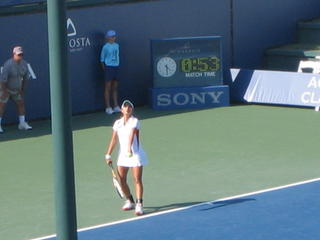
On Saturday, went to watch Acura Classic Tennis tournament at Carlsbad with my roomies. Having an Acura helped - free Parking.

The first match that we watched involved Shikha Uberoi - an Indian American who decided to play for India. It was a keenly fought match which she won in three sets. The sizeable Indian section of the crowd - mostly of Electronics/Computer Engineers, vociferously supported her. Sania Mirza needed not much support as she easily defeated her opponent losing only two games. Her ground strokes were accurate and powerful.
The day was great, so we went to beach in the evening and then for another good dinner at California Pizza Kitchen - one of the best place for Pizzas. Came home and finished reading Angels and Demons till 6:30 a.m. The book is ok, may be because one tends to compare it with Da Vinci code. Slept for three hours of Sunday morning, and then went to Torre Pines for hiking. There were three-four trails along the beach which were great. Hiked for around five hours and then went to our friend's home who has bought a 65" flat TV to watch Bunty aur Bubbly. Okish movie. Not so great.
I had simulation for my thesis work running on my laptop throughout the weekend - so there was no guilty feeling while enjoying. Got the expected results,too.
Why did I write this? I actually don't like blogging routine events. I don't consider my life so significant or interesting to write about it in detail. For the same reason, I gave up writing daily diary which I started when I was 11-12. But this week-end was different. I recollect my boring weekends of first two years in US, when we did not have car or internet connection/TV at home or enough money/information to go visit places. The next year was worse, when at least one week-end per month was spent at job to meet deadlines and rest of them doing chores and feeling monday blues. This break from work is refreshing to say the least. Somerset Maugham once defined Ideal life as - Good friends, Good food and a sleepy conscience. Well,it was not exactly that way but ideal for me nonetheless.
On Saturday, went to watch Acura Classic Tennis tournament at Carlsbad with my roomies. Having an Acura helped - free Parking.
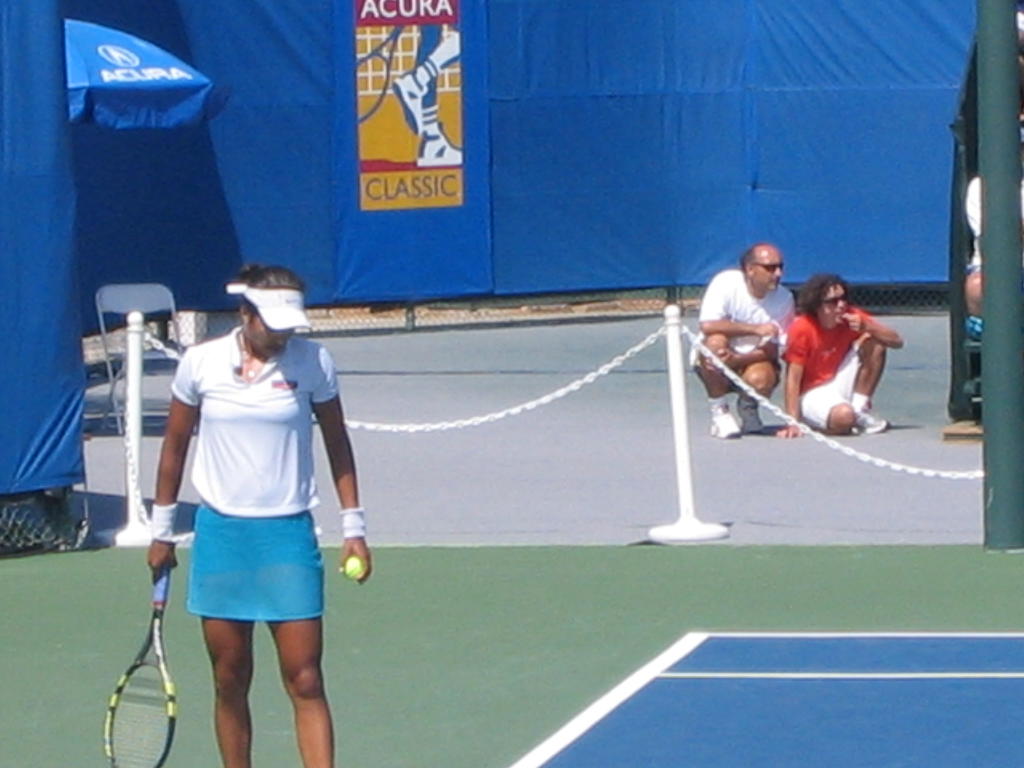
The first match that we watched involved Shikha Uberoi - an Indian American who decided to play for India. It was a keenly fought match which she won in three sets. The sizeable Indian section of the crowd - mostly of Electronics/Computer Engineers, vociferously supported her. Sania Mirza needed not much support as she easily defeated her opponent losing only two games. Her ground strokes were accurate and powerful.
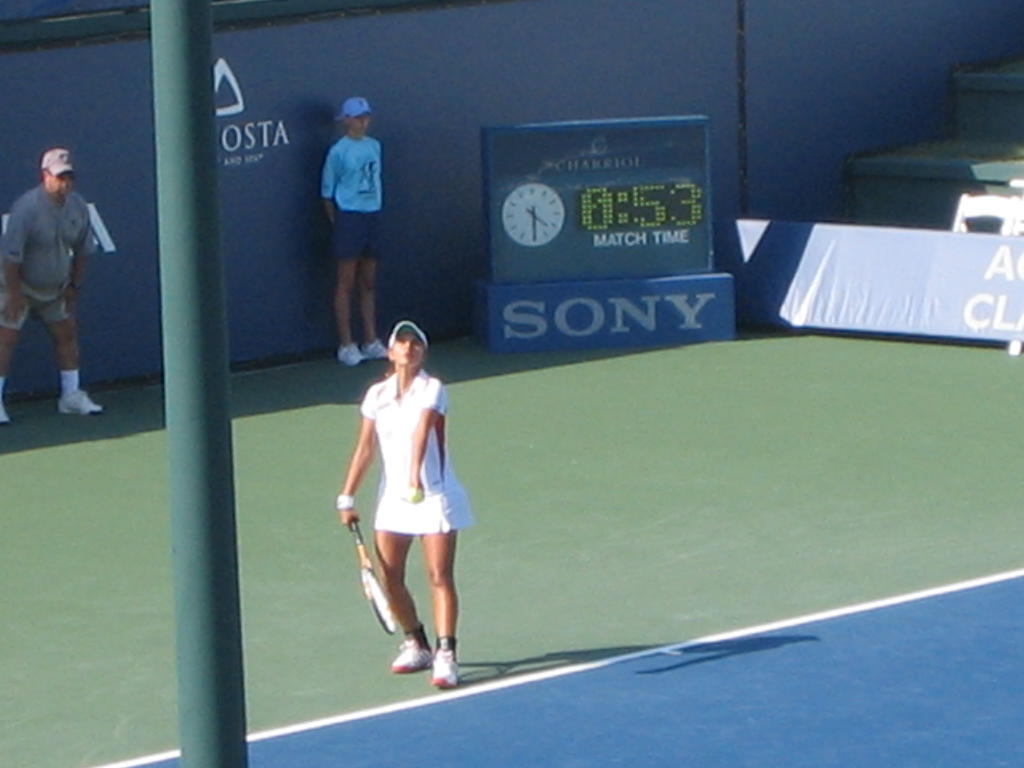
The day was great, so we went to beach in the evening and then for another good dinner at California Pizza Kitchen - one of the best place for Pizzas. Came home and finished reading Angels and Demons till 6:30 a.m. The book is ok, may be because one tends to compare it with Da Vinci code. Slept for three hours of Sunday morning, and then went to Torre Pines for hiking. There were three-four trails along the beach which were great. Hiked for around five hours and then went to our friend's home who has bought a 65" flat TV to watch Bunty aur Bubbly. Okish movie. Not so great.
I had simulation for my thesis work running on my laptop throughout the weekend - so there was no guilty feeling while enjoying. Got the expected results,too.
Why did I write this? I actually don't like blogging routine events. I don't consider my life so significant or interesting to write about it in detail. For the same reason, I gave up writing daily diary which I started when I was 11-12. But this week-end was different. I recollect my boring weekends of first two years in US, when we did not have car or internet connection/TV at home or enough money/information to go visit places. The next year was worse, when at least one week-end per month was spent at job to meet deadlines and rest of them doing chores and feeling monday blues. This break from work is refreshing to say the least. Somerset Maugham once defined Ideal life as - Good friends, Good food and a sleepy conscience. Well,it was not exactly that way but ideal for me nonetheless.
Monday, July 18, 2005
Plays and food for thought
I drove to Los Angeles on Sunday to watch two Marathi plays by Suyog - "Ethe havay kunala prem?" and "Appa aani Bappa". The first one was a light comedy about various stages of marital relationship. The other play Appa aani Bappa was a classic. Two great actors - Vikram Gokhale and Dileep Prabhavalkar portrayed two friends who had worked together in a farce over 40 years only to part ways after a misunderstanding.
It was worth driving for two hours each way (130 miles or so) to watch these veteran actors perform. Not just the play, but the whole ambience transformed me back to good old Mumbai theatres. Those bells ringing before the curtain goes up, that divine smell of coffee and batata-wadas and close to 500 strong crowd. For a moment, it was like a play in Deenanath at Parle. Theatre is a fascinating medium and I guess, no matter how many dimensions we add to movies; theatre will retain its charm.
Interestingly for both the plays, I was sandwiched between a Kannada family from Pune on my right and a Gujarati family from Mumbai on my left. People speaking Kannada, Konkani and Gujarati watching a play in Marathi in an area dominated by Spanish speaking immigrants from Mexico. Last Sunday, it was turn of my Turkish and Korean colleagues to watch Sarkar in theatre with us.
I trust, this pot-pourri of cultures is the most interesting thing about Mumbai and California. I actually have a personal record of having food from seven different cuisines (Swedish, Indian, Persian, Chinese, Mexican, Greek and Hawaiian) for seven meals in 3 days (no wonder, I weigh close to 75 kg). I could go on and on, with this thread to belabor my point of how variety is the spice of life and how globalization is bringing different cultures closer, but then I have to leave for a Japanese Sushi n Tempura fair. Man, how I enjoy not working and sitting at home doing plain nothing!
It was worth driving for two hours each way (130 miles or so) to watch these veteran actors perform. Not just the play, but the whole ambience transformed me back to good old Mumbai theatres. Those bells ringing before the curtain goes up, that divine smell of coffee and batata-wadas and close to 500 strong crowd. For a moment, it was like a play in Deenanath at Parle. Theatre is a fascinating medium and I guess, no matter how many dimensions we add to movies; theatre will retain its charm.
Interestingly for both the plays, I was sandwiched between a Kannada family from Pune on my right and a Gujarati family from Mumbai on my left. People speaking Kannada, Konkani and Gujarati watching a play in Marathi in an area dominated by Spanish speaking immigrants from Mexico. Last Sunday, it was turn of my Turkish and Korean colleagues to watch Sarkar in theatre with us.
I trust, this pot-pourri of cultures is the most interesting thing about Mumbai and California. I actually have a personal record of having food from seven different cuisines (Swedish, Indian, Persian, Chinese, Mexican, Greek and Hawaiian) for seven meals in 3 days (no wonder, I weigh close to 75 kg). I could go on and on, with this thread to belabor my point of how variety is the spice of life and how globalization is bringing different cultures closer, but then I have to leave for a Japanese Sushi n Tempura fair. Man, how I enjoy not working and sitting at home doing plain nothing!
Sunday, July 03, 2005
आषाढस्य प्रथमदिवसे
Thursday July 7 will be celebrated as Mahakavi Kalidas Din. It is because as per Indian calendar, it is the first day of Aashadh month. His epic Meghadoot starts with following lines :
आषाढस्य प्रथमदिवसे मेघमाश्लिष्टसानु वप्रक्रीडापरिणीत गज प्रेक्षणीय ददर्ष
I am not sure of verbatim meaning, but it describes a black-coloured cloud, which Kalidasa thinks looks like a spectacular elephant ready for playing.
Sigh! I miss the Mumbai monsoon
आषाढस्य प्रथमदिवसे मेघमाश्लिष्टसानु वप्रक्रीडापरिणीत गज प्रेक्षणीय ददर्ष
I am not sure of verbatim meaning, but it describes a black-coloured cloud, which Kalidasa thinks looks like a spectacular elephant ready for playing.
Sigh! I miss the Mumbai monsoon
Wednesday, June 22, 2005
Of that lamentable company
I was not aware of Tagging till Sudhamshu book-tagged me. I am answering the tagging questions the way he has. Unfortunately, among my friends I only know Sudhamshu who is a regular blogger. As a result, I won't be able to tag anyone further.
Here I go:
Total no. of books I own : around 400-450
Except 3-4 books in English and couple in Sanskrit, rest all are in my mother-tongue : Marathi.
Of course, I haven't counted technical books and story-books for children. [I have still kept a few for nostalgic reasons - like the ones I was gifted on my 6th birthday or for topping my class in Second standard : this is some kind of success, I must add, I have been unable to enjoy in my adult life :)]
Last book that I bought:
Can't name just one, as I went to Ideal book depot at Dadar, Mumbai and bought around 15-16 books which I had enlisted in last year or two. It won't make much sense naming them here as all are in Marathi.
Books that left lasting impact on me:
Bhagvad-geeta
Of human bondage - W. Somerset Maugham
The fountainhead
Aahe manohar tari (Though it is pleasant) - Suneeta Deshpande
Baromas (12 months or round the year) - Sadanand Deshmukh (Sahitya Akademi award winner)
The other worth mentioning are collection of short stories by Maugham like East and West, Lord of the flies, all the Jeeves and Psmith collection by Wodehouse, Exodus, Animal Farm by Orwell and Mother by Maksim Gorky.
Unfortunately, I started reading English literature quite late in my life - at the age of 22, so I am still a novice in that. Some books in Marathi like Vishakha, Vyakti aani valli and Poorv-rang left a lasting impression on my mind.
I recollect reading Poorv-rang (travelogue about East Asian countries) when I was in 5th or 6th standard and getting the feeling that I have read something great. I guess that was the transition point in moving from Kid stuff to Serious literature. Though, Poorv-rang by no means is the best work by Pu. La. Deshpande and though I came across many other classics later on; it has a special place solely because that was the beginning. This was the time when Languages, first Marathi and then Sanskrit, became my most favorite subjects at school. Before that, Maths was the most favourite subject and looked like no other subject would appear more interesting.
Currently I am trying a little bit different approach. I read two or three factual or non-fiction books. One was India Unbound by Gurcharan Das on Indian Economy since independence till post-1991 Economic reforms and another Pakistan : Eye of storm by Bennett Jones. My guess was that I won't be able to read the first one with the same interest as novels. But I was wrong and it made an interesting reading.
The other approach is reading critical essays in Marathi. Of course, I made sure that I have read majority of the books of the author, whose work will be the subject of these essyas. It really makes a good reading because, having read the works of author, the critic gives you an additional dimension to understand and enjoy his work. Usually, he also would point to certain references which might escape in casual reading.
A good critic draws your attention to various other books which have a similar point that he is trying to prove. ( - so you know more names of the books worth reading, or at least giving a try). I discovered couple of good books this way, which for some reason did not enjoy the success they deserved and mostly would have remained unknown to me.
There is of course, whole another branch that deals with this scientific study of art. The books that I am reading right now are Himwantichi sarovare by Da. Bhi. Kulkarni and Saundaryanubhav by Prabhakar Padhye. I was initially bogged down by words like Existentialism, Logical positivism ( that too, explained in Sanskrit-nishtha Marathi) et al but then slowly things began to make sense (or so I think). Now, when I re-read the old books; it is with more insight and try to find some things that could have escaped before.
I wish I had same perseverance with my studies!
Here I go:
Total no. of books I own : around 400-450
Except 3-4 books in English and couple in Sanskrit, rest all are in my mother-tongue : Marathi.
Of course, I haven't counted technical books and story-books for children. [I have still kept a few for nostalgic reasons - like the ones I was gifted on my 6th birthday or for topping my class in Second standard : this is some kind of success, I must add, I have been unable to enjoy in my adult life :)]
Last book that I bought:
Can't name just one, as I went to Ideal book depot at Dadar, Mumbai and bought around 15-16 books which I had enlisted in last year or two. It won't make much sense naming them here as all are in Marathi.
Books that left lasting impact on me:
Bhagvad-geeta
Of human bondage - W. Somerset Maugham
The fountainhead
Aahe manohar tari (Though it is pleasant) - Suneeta Deshpande
Baromas (12 months or round the year) - Sadanand Deshmukh (Sahitya Akademi award winner)
The other worth mentioning are collection of short stories by Maugham like East and West, Lord of the flies, all the Jeeves and Psmith collection by Wodehouse, Exodus, Animal Farm by Orwell and Mother by Maksim Gorky.
Unfortunately, I started reading English literature quite late in my life - at the age of 22, so I am still a novice in that. Some books in Marathi like Vishakha, Vyakti aani valli and Poorv-rang left a lasting impression on my mind.
I recollect reading Poorv-rang (travelogue about East Asian countries) when I was in 5th or 6th standard and getting the feeling that I have read something great. I guess that was the transition point in moving from Kid stuff to Serious literature. Though, Poorv-rang by no means is the best work by Pu. La. Deshpande and though I came across many other classics later on; it has a special place solely because that was the beginning. This was the time when Languages, first Marathi and then Sanskrit, became my most favorite subjects at school. Before that, Maths was the most favourite subject and looked like no other subject would appear more interesting.
Currently I am trying a little bit different approach. I read two or three factual or non-fiction books. One was India Unbound by Gurcharan Das on Indian Economy since independence till post-1991 Economic reforms and another Pakistan : Eye of storm by Bennett Jones. My guess was that I won't be able to read the first one with the same interest as novels. But I was wrong and it made an interesting reading.
The other approach is reading critical essays in Marathi. Of course, I made sure that I have read majority of the books of the author, whose work will be the subject of these essyas. It really makes a good reading because, having read the works of author, the critic gives you an additional dimension to understand and enjoy his work. Usually, he also would point to certain references which might escape in casual reading.
A good critic draws your attention to various other books which have a similar point that he is trying to prove. ( - so you know more names of the books worth reading, or at least giving a try). I discovered couple of good books this way, which for some reason did not enjoy the success they deserved and mostly would have remained unknown to me.
There is of course, whole another branch that deals with this scientific study of art. The books that I am reading right now are Himwantichi sarovare by Da. Bhi. Kulkarni and Saundaryanubhav by Prabhakar Padhye. I was initially bogged down by words like Existentialism, Logical positivism ( that too, explained in Sanskrit-nishtha Marathi) et al but then slowly things began to make sense (or so I think). Now, when I re-read the old books; it is with more insight and try to find some things that could have escaped before.
I wish I had same perseverance with my studies!
Tuesday, May 17, 2005
IMG_0114
Sunrise seen from a hill. I surprised myself and all my relatives by waking up at 5:30 am ready for trek of an hour.

Tuesday, April 19, 2005
Outsider and Insider
I am really a novice when it comes to blogging. Sudhamshu's latest blog (which could be found under the apt name of Professional Pakau) kind of inspired me into writing this.
As I write this, I remember a short anecdote I read in one of my textbooks. The writer tries to get into a crowded train compartment. As it is already crowded, people inside ask him to go to the next one saying that it is less crowded. Nevertheless, when he decides to come in, a well-built guy makes sure that his entry is not very comfortable by blocking his way. However once he is in and the train departs, he slowly finds himself being accepted and when the next station comes, he and the guy who blocked his entry rally together to block outsiders coming in.
What this means, is that there are really no divisions based on religion, nation, money or race. All conflicts basically arise in two groups - insiders and outsiders. Depending on our interests, we play both the roles in different situations. Outsiders struggle to be insiders, and once in more often than not oppose the rest.
So it is not surprising or even self-contradictory when someone advocating banning outsiders coming into metros like Mumbai or Bangalore, is ready to send his children to another country and most often wishes that they would settle there. He is just an insider in his own city, but outsider to that coveted nation.
Narrowing the scope of this discussion to immigration, I guess it is an inevitable process. On a larger scale, it represents the perpetual struggle between Haves and Have-nots. No one can really prevent it; the best they can do is slow it down.
Outsiders usually tend to do better, as mostly they have nothing to lose, are prepared to work harder and take more risks. So if insiders feel a bit of grudge about people coming from outside and feeling insecure about their own future, then it is not unnatural.
Working in a way to preserve one's interest is the natural instinct and when it is coupled with the sense of insecurity and injustice, the insiders do take some drastic measures. Banning movies from a different language being displayed or beating up people coming from a different state or country are just a few examples of it. The holocaust could easily be the gravest one.
The question is where will this lead us? - more hatred and more wars? No one can predict.
But strangely, it appears that the path of attaining Moksha means being outsider to your body and soul. Does that appear to be a simple problem to solve?
As I write this, I remember a short anecdote I read in one of my textbooks. The writer tries to get into a crowded train compartment. As it is already crowded, people inside ask him to go to the next one saying that it is less crowded. Nevertheless, when he decides to come in, a well-built guy makes sure that his entry is not very comfortable by blocking his way. However once he is in and the train departs, he slowly finds himself being accepted and when the next station comes, he and the guy who blocked his entry rally together to block outsiders coming in.
What this means, is that there are really no divisions based on religion, nation, money or race. All conflicts basically arise in two groups - insiders and outsiders. Depending on our interests, we play both the roles in different situations. Outsiders struggle to be insiders, and once in more often than not oppose the rest.
So it is not surprising or even self-contradictory when someone advocating banning outsiders coming into metros like Mumbai or Bangalore, is ready to send his children to another country and most often wishes that they would settle there. He is just an insider in his own city, but outsider to that coveted nation.
Narrowing the scope of this discussion to immigration, I guess it is an inevitable process. On a larger scale, it represents the perpetual struggle between Haves and Have-nots. No one can really prevent it; the best they can do is slow it down.
Outsiders usually tend to do better, as mostly they have nothing to lose, are prepared to work harder and take more risks. So if insiders feel a bit of grudge about people coming from outside and feeling insecure about their own future, then it is not unnatural.
Working in a way to preserve one's interest is the natural instinct and when it is coupled with the sense of insecurity and injustice, the insiders do take some drastic measures. Banning movies from a different language being displayed or beating up people coming from a different state or country are just a few examples of it. The holocaust could easily be the gravest one.
The question is where will this lead us? - more hatred and more wars? No one can predict.
But strangely, it appears that the path of attaining Moksha means being outsider to your body and soul. Does that appear to be a simple problem to solve?
Saturday, September 25, 2004
Waiting for weekend
I guess Friday is more pleasant than Saturday. May be it is just like the wait to achieve what you want and the feeling that it is so nearby is more relaxing than getting it actually. W. Somerset Maugham perhaps meant the same thing when he commented that perfection is always trifle boring, or we can compare it with the journey being more memorable than the destination. All right, this is really stretching it too far. but it is almost 2 a.m. now and after a long day, I cannot think properly - getting ready to sleep, hence all this rubbish.
Subscribe to:
Posts (Atom)